Are Premium Sherwin-Williams Interior and Exterior Paints Worth It?
Sherwin-Williams SuperPaint: A Great Mid-Tier Option for Interior and Exterior Painting
When homeowners ask us whether higher-quality paint is really worth the additional cost, Sherwin-Williams SuperPaint is a good place to start the conversation.
At Tri-Plex Painting, we consider SuperPaint a strong mid-tier option for both interior and exterior painting projects. There are less expensive Sherwin-Williams products available, such as ProMar 200 for interiors, and there are also premium products above SuperPaint. The important question isn't always, "What's the most expensive paint?" It's which product makes the most sense for the home, surface, budget, and expectations for longevity.
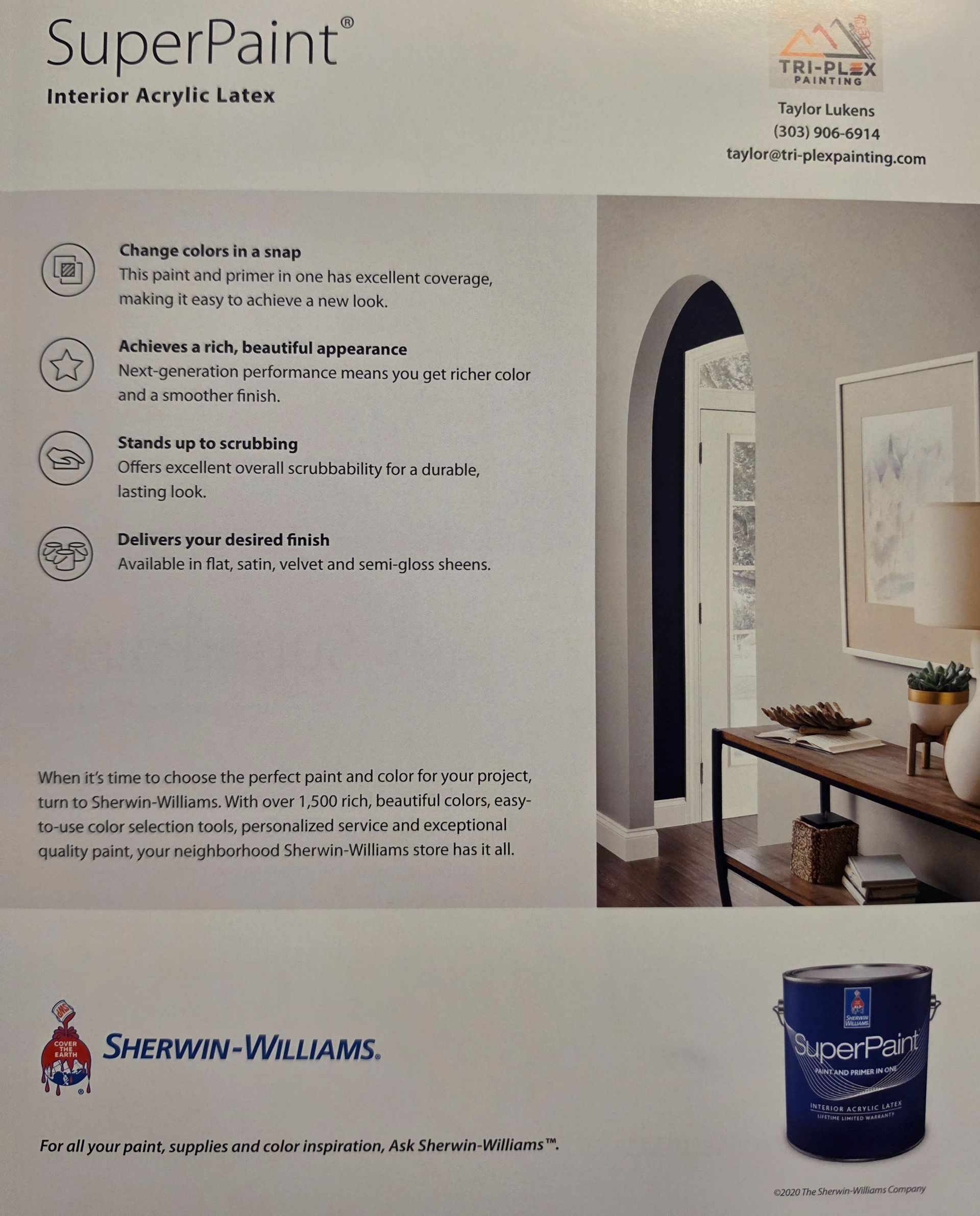
Why Choose SuperPaint Interior?
For interior painting, SuperPaint provides a noticeable step up in overall performance while remaining reasonably priced. One of its biggest advantages is the balance between coverage, durability, cleanability, and finish quality.
A better-quality coating generally provides a stronger paint film once it has cured. That matters in real homes. Walls get touched, bumped, cleaned, and exposed to everyday wear—especially in hallways, living rooms, bedrooms, kitchens, and homes with children or pets.
SuperPaint Interior provides good washability and durability, making it easier to maintain painted walls over time. It also offers good hide and coverage, helping produce a more uniform finished appearance.
Sherwin-Williams offers SuperPaint in a broad range of colors and sheens, giving homeowners plenty of flexibility when selecting colors throughout their home. Whether you're choosing a subtle neutral or making a dramatic color change, having a quality coating with strong hide becomes particularly important.
There are less expensive options. Sherwin-Williams ProMar 200, for example, is commonly used for commercial, rental, new-construction, and other projects where budget and production efficiency may be major considerations. It can absolutely be the right product for certain applications.
For a homeowner who plans to live with the finished product every day, however, stepping up to SuperPaint can make sense when better durability, washability, coverage, and long-term performance are priorities.
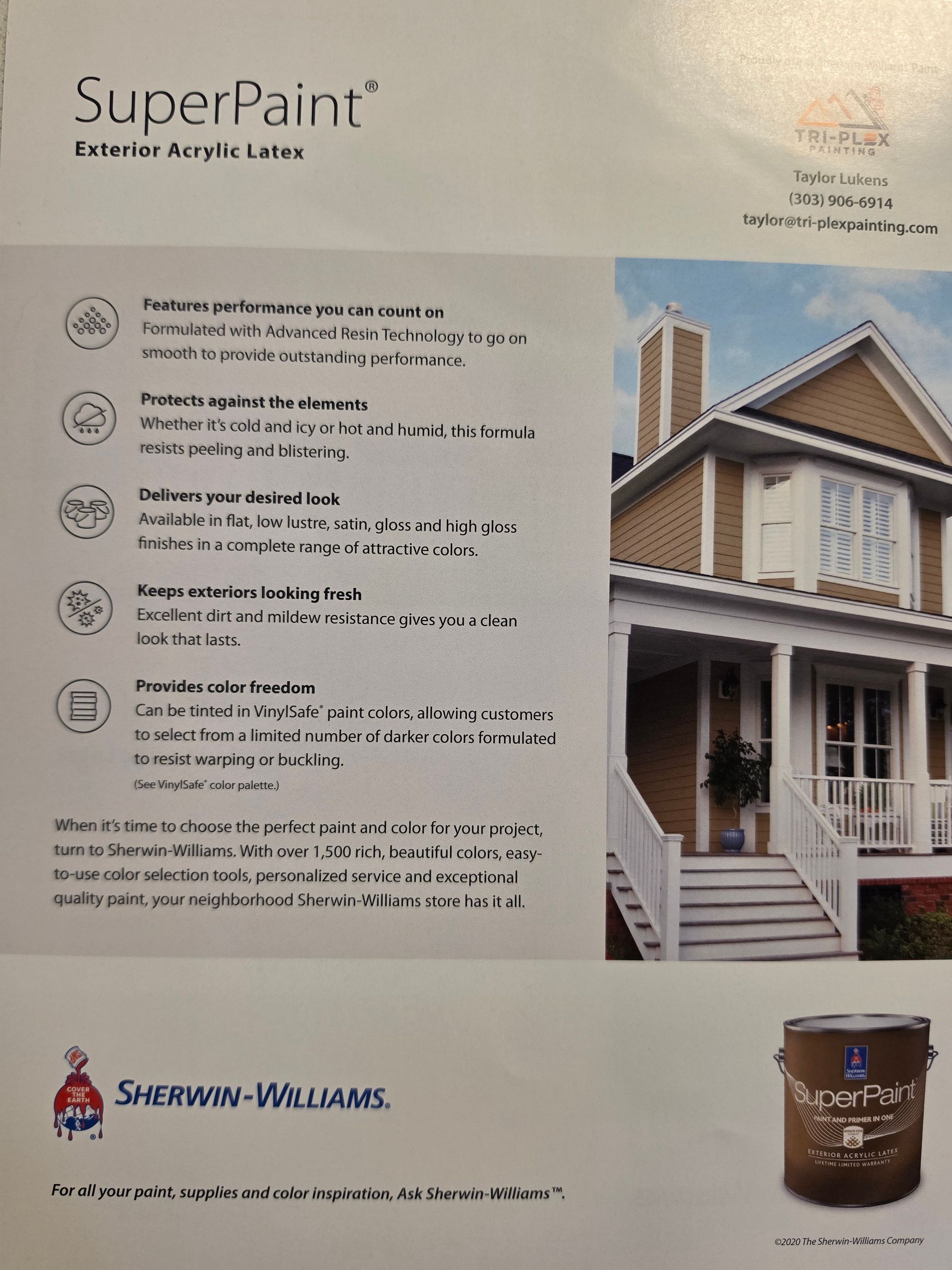
What Makes SuperPaint Exterior a Good Value?
On an exterior, the conversation changes because paint isn't there just for appearance. It's also part of the system protecting your home.
Colorado homes have to contend with intense sunlight and UV exposure, temperature swings, snow, rain, wind, and repeated seasonal changes. Your exterior coating needs to maintain adhesion and provide protection while those conditions continually work against it.
Sherwin-Williams SuperPaint Exterior is a solid mid-tier choice because it provides a good balance of film thickness, adhesion, weather resistance, coverage, and longevity without requiring homeowners to move into the highest-priced premium product lines.
That film build is important. Once properly applied and cured, the coating creates a protective layer over siding, trim, and other compatible exterior surfaces. Of course, even an excellent paint cannot compensate for deteriorated siding, moisture problems, failed caulking, or poor preparation—which is why we put so much emphasis on prep before we ever start painting.
Does Better Paint Automatically Mean a Longer-Lasting Paint Job?
Not necessarily—and this is an important distinction.
A higher-quality paint can provide better durability, color retention, cleanability, coverage, and protection, but the paint is only one part of a successful painting system.
We can use an excellent Sherwin-Williams product, but if it's applied over loose paint, deteriorated wood, dirty surfaces, or improperly prepared siding, you're not getting the full benefit of that product.
At Tri-Plex Painting, we look at the entire system: surface preparation + primer where needed + proper application + appropriate film thickness + quality finish paint.
That's also why our crews use application methods such as spraying followed by back-rolling or back-brushing when appropriate. We're not simply trying to make the surface a new color. We want the coating properly worked into the substrate so it can perform the way it was designed to.
So, Is Sherwin-Williams SuperPaint Worth It?
For many residential projects, yes.
SuperPaint occupies a useful middle ground. You're getting a significant amount of performance without automatically jumping to Sherwin-Williams' most expensive products.
But we don't believe every homeowner needs the most expensive gallon of paint available.
Sometimes SuperPaint is exactly what the project calls for. On another home, stepping up to a product such as Duration or Emerald may make sense because of the surface condition, exposure, desired finish, or homeowner's expectations. In other situations, a more economical product may be perfectly appropriate.
After decades of painting homes throughout Littleton, Highlands Ranch, Centennial, Parker, Castle Rock, Lakewood, Golden, Morrison, Lone Tree, and the Denver Metro area, we've learned that choosing paint shouldn't simply come down to the price printed on the can.
The better question is: What are you expecting the paint to do?
Once we understand that, we can recommend a product that makes sense for your home, your budget, and how long you expect the finished project to perform.
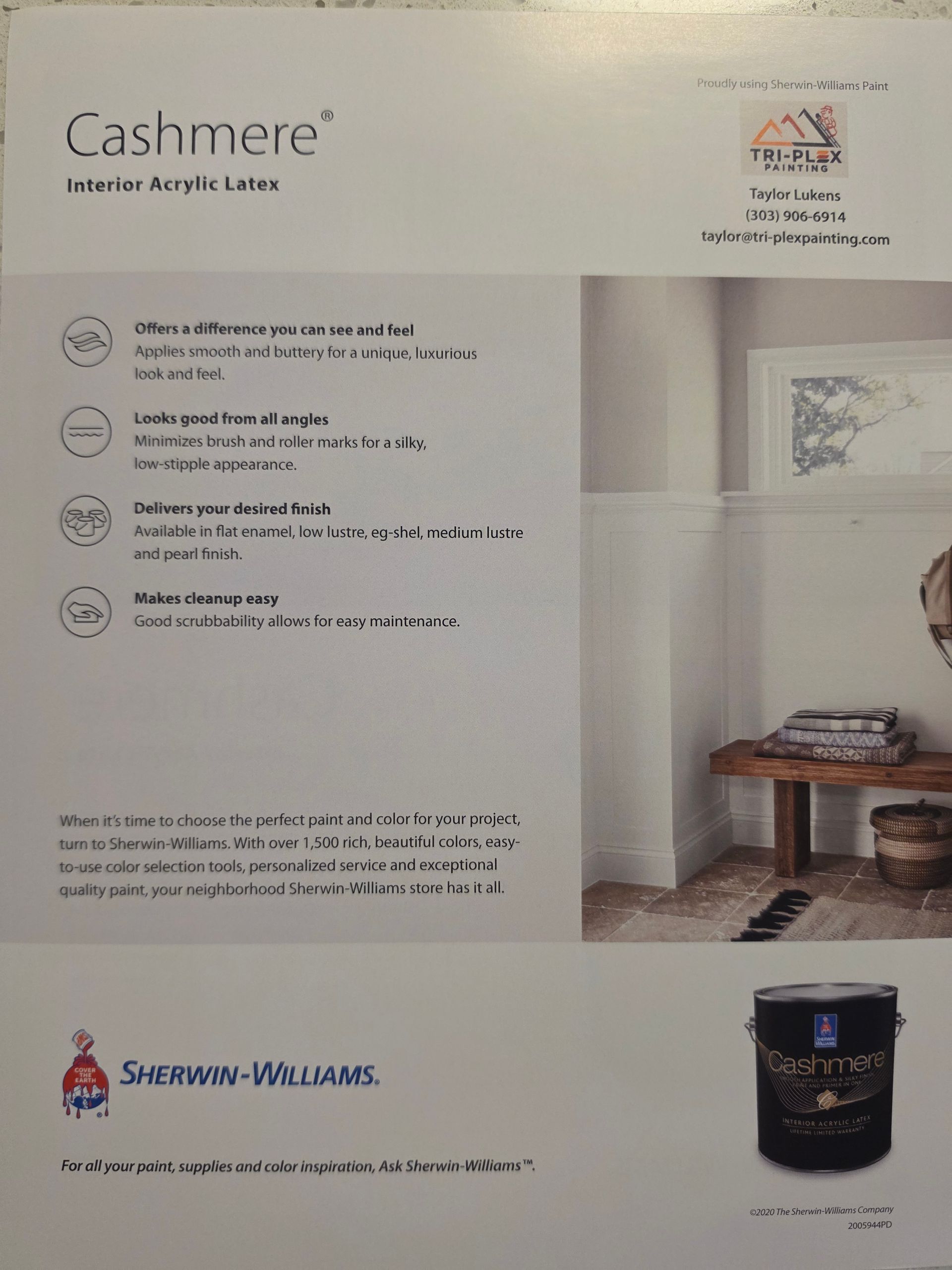
Sherwin-Williams Latitude Exterior and Cashmere Interior: Where Do They Fit?
As you move through Sherwin-Williams' different paint products, it becomes clear pretty quickly that there isn't one "best" paint for every project. Some products are designed around durability, others around application, appearance, weather conditions, or a combination of those things.
Two products we think are worth discussing are Sherwin-Williams Latitude for exteriors and Cashmere for interiors.
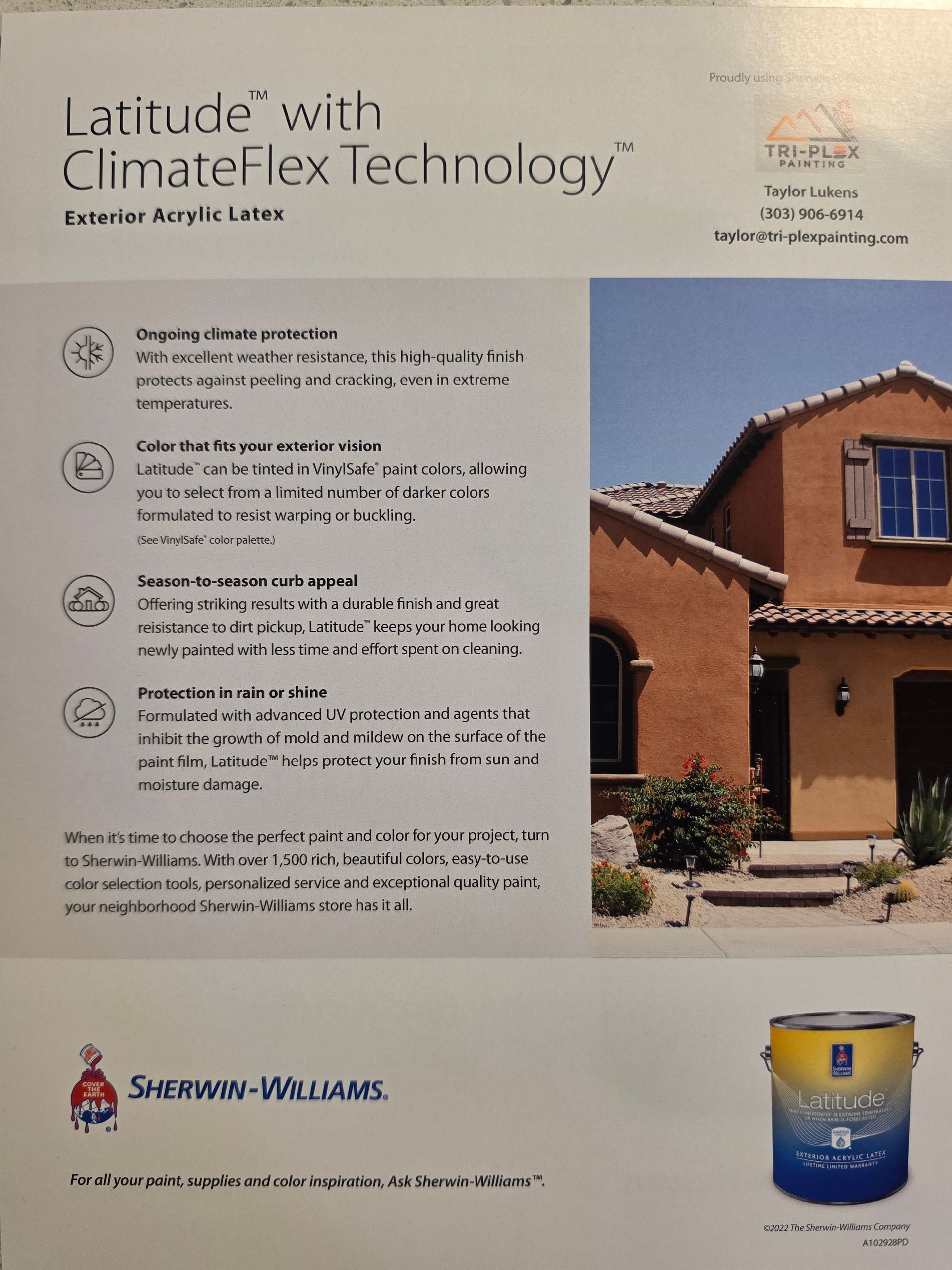
Latitude Exterior: What Makes It Different?
With exterior painting in Colorado, weather is always part of the conversation.
Anyone who has lived around Denver for a while knows how quickly conditions can change. A cool morning can turn into a hot afternoon, and temperature swings are simply part of painting homes along the Front Range.
This is one area where Latitude Exterior can be an interesting option.
Latitude is designed to give professional painters more flexibility when dealing with changing weather conditions. That doesn't mean we ignore the forecast or paint in inappropriate conditions. We still pay close attention to temperature, moisture, the surface we're painting, and what the weather is expected to do after application.
What it does mean is that Latitude gives us another tool when we're planning an exterior project around Colorado's unpredictable weather.
But does every exterior need Latitude? Not necessarily.
If we're painting during a stretch of predictable weather and another quality exterior coating is better suited to the homeowner's goals or budget, there may be no reason to choose Latitude simply because it's available.
This gets back to something we tell homeowners frequently: paint selection should match the project.
Preparation still matters. The condition of the siding and trim still matters. Application still matters. And the amount of Colorado sun hitting one side of the house versus another can matter just as much as the name printed on the paint can.
Cashmere Interior: Sometimes the Finished Look Is the Priority
Cashmere Interior is a different conversation.
When we're discussing interior paint with a homeowner, durability and cleanability obviously matter. But they're not always the only priorities.
Sometimes the homeowner simply wants the walls to look really good.
That's where Cashmere has earned a strong following. It's known for producing a smooth, refined finish that can make walls feel a little more finished and polished. The way a coating levels as it dries can make a noticeable difference, particularly in rooms with a lot of natural light where wall imperfections and roller texture can become more visible.
We tend to think about this in living rooms, dining rooms, primary bedrooms, offices, and other spaces where appearance may be especially important.
There's a tradeoff, though.
If we're talking about a hallway taking constant abuse, a busy kitchen, a rental property, or another high-traffic environment, our product recommendation might be different. Cleanability, durability, sheen, and expected wear all need to be part of that discussion.
That's why asking "Is Cashmere better than SuperPaint?" doesn't always have a simple answer.
Better for what?
If you're primarily interested in a smooth, attractive wall finish, Cashmere deserves consideration. If your biggest concern is something else, another Sherwin-Williams interior paint may make more sense.
So, Are Latitude and Cashmere Worth Considering?
Absolutely, but for different reasons.
Latitude gives us an exterior option designed with weather flexibility in mind, which can be particularly useful when painting homes throughout Littleton, Highlands Ranch, Centennial, Parker, Castle Rock, Lakewood, and the Denver Metro area.
Cashmere gives us an interior option when the appearance and smoothness of the finished walls are high priorities.
At Tri-Plex Painting, we don't believe choosing paint should mean automatically moving up the price chart until you reach the most expensive product. We would rather have a conversation about the home first.
Where is the paint going? What condition is the surface in? How much wear will it receive? Is appearance the biggest concern? Durability? Colorado weather? Budget? How long do you plan to stay in the home?
Those answers usually tell us much more about which paint to recommend than the price of the gallon does.
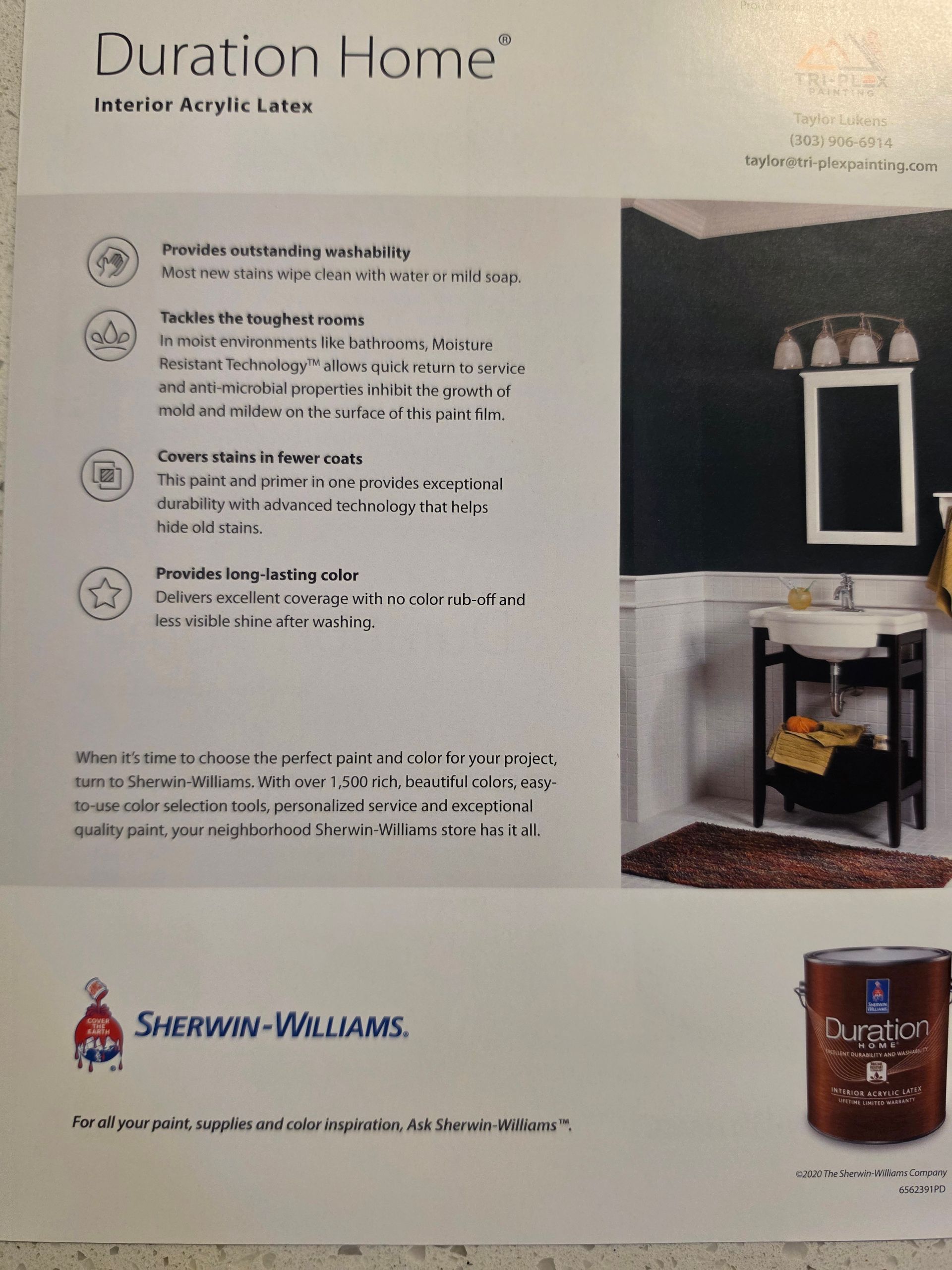
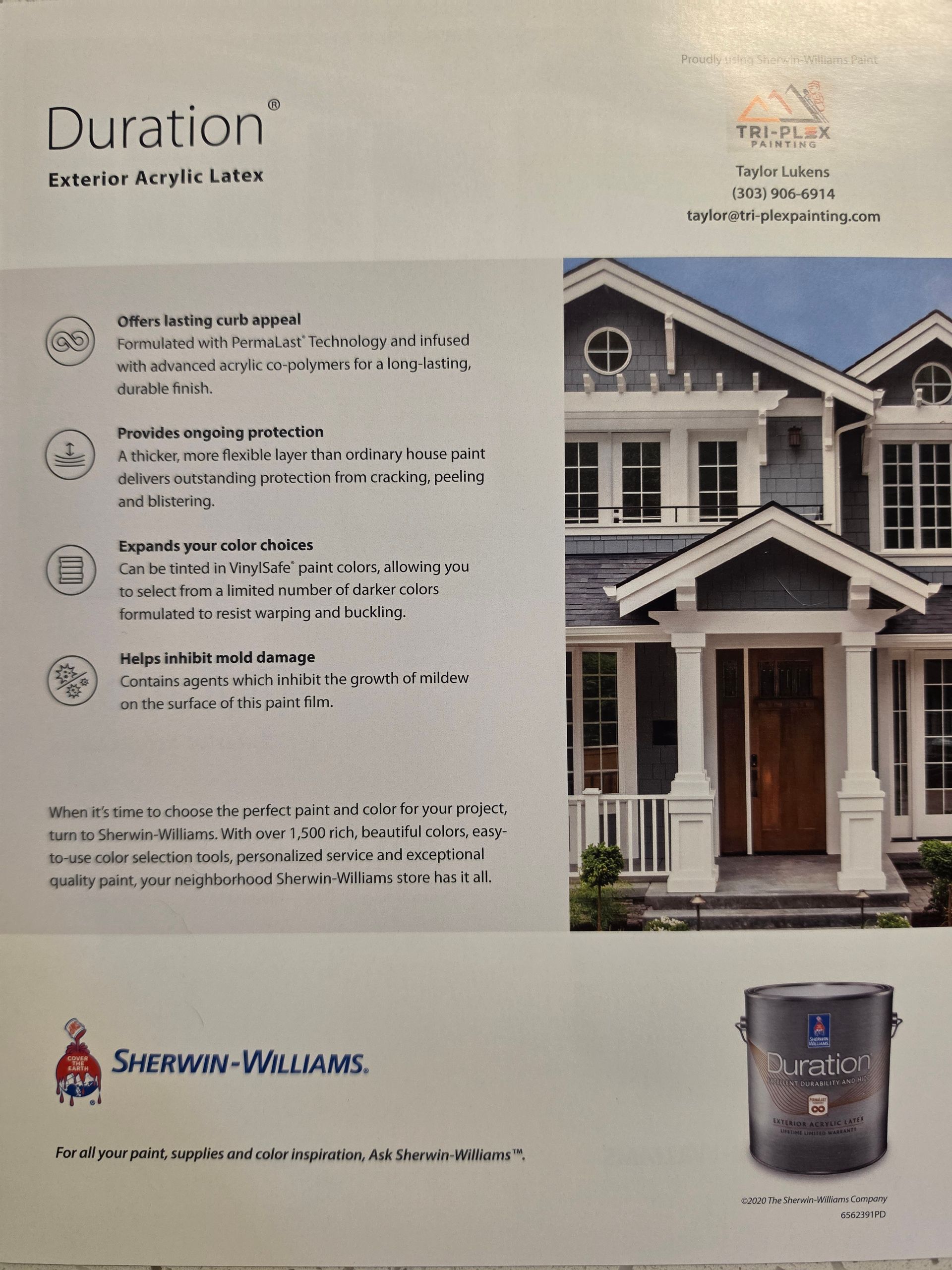
Sherwin-Williams Duration Interior and Exterior: When Does Stepping Up Make Sense?
This is where the paint conversation gets a little more interesting.
Once you move into Sherwin-Williams Duration, you're getting into a higher-end product. Naturally, that comes with a higher price. So when we're talking with a homeowner, the question isn't just whether Duration is a good paint. It is.
The better question is whether the benefits of Duration make sense for that particular project.
Duration Exterior: When Longevity Matters
For an exterior painting project, we like to think beyond what the house will look like when we're finished. How is that coating going to perform after several years of Colorado sun, snow, moisture, and temperature changes?
Duration Exterior is a product we use when homeowners are looking for a higher level of protection and long-term performance.
One thing we like about Duration is the heavier-bodied coating and the film it creates when properly applied. On exterior siding and trim, having a substantial, properly applied coating helps protect the surface underneath while providing good coverage and color retention.
That doesn't mean thicker paint fixes bad siding.
We've talked about this in other projects because it's an important distinction. If wood trim is rotten, siding is deteriorating, or an existing coating is badly failing, putting an expensive paint over it isn't going to solve the underlying problem. We still need to scrape, sand, prime, caulk, and sometimes replace damaged siding or trim before painting.
We've actually used Duration Low Lustre on cedar siding where we first had to do extensive scraping, sanding, priming, and some wood replacement. Low Lustre is a finish we particularly like on certain exteriors because it provides a slight sheen without making the siding look overly shiny.
When appropriate, we'll also spray and back-roll or back-brush the coating. This helps work the paint into textured siding and other surfaces rather than allowing it to simply sit on top.
Is Duration Exterior necessary for every house? Probably not. But when a homeowner is already investing in extensive preparation and wants to maximize the performance of that work, stepping up in paint quality starts to make a lot of sense.
What About Duration Interior?
Duration Interior has a somewhat different selling point.
Inside a home, we're generally not worried about snow, UV exposure, or Colorado temperature swings. Instead, we're thinking about fingerprints, kids, pets, cooking, moisture, scuffs, and how often somebody is going to clean the walls.
That's where Duration Interior becomes worth discussing.
Its durability and washability make it a strong candidate for busy areas of a home. Kitchens, hallways, family rooms, bathrooms, children's rooms, and other frequently used spaces can benefit from a coating designed to tolerate regular cleaning.
There is also something homeowners don't always consider when choosing interior paint: the paint has to continue looking good after you start living with it.
A wall can look fantastic the day we finish painting it. The bigger test comes six months or two years later when you've wiped it down repeatedly, furniture has bumped against it, and everyday life has happened.
That's part of what you're paying for when you move into a product like Duration.
Would We Use Duration Everywhere?
This is where we don't think there's a universal answer.
If you're repainting a guest bedroom that is barely used, do you need the same coating you would choose for a busy kitchen or hallway? Maybe not.
On the other hand, if you're planning to stay in your home for years and don't want to repaint high-use areas as frequently, spending more upfront for a more durable and washable product may be worthwhile.
The same thinking applies outside.
A heavily exposed elevation taking intense afternoon sun and weather may have different needs than a protected portion of the home. The condition of the substrate, previous coating, color selection, preparation requirements, and homeowner expectations all influence what we recommend.
At Tri-Plex Painting, that's how we prefer to discuss paint products with homeowners throughout Littleton, Highlands Ranch, Centennial, Parker, Castle Rock, Lakewood, Golden, Morrison, Lone Tree, and the Denver Metro area.
We don't start by asking, "What's the most expensive paint we can put on this house?"
We start with a different question:
What does this particular home need?
Sometimes the answer is SuperPaint. Sometimes Latitude or Cashmere makes more sense. And when durability, washability, and long-term performance become higher priorities, Sherwin-Williams Duration is often where the conversation leads.
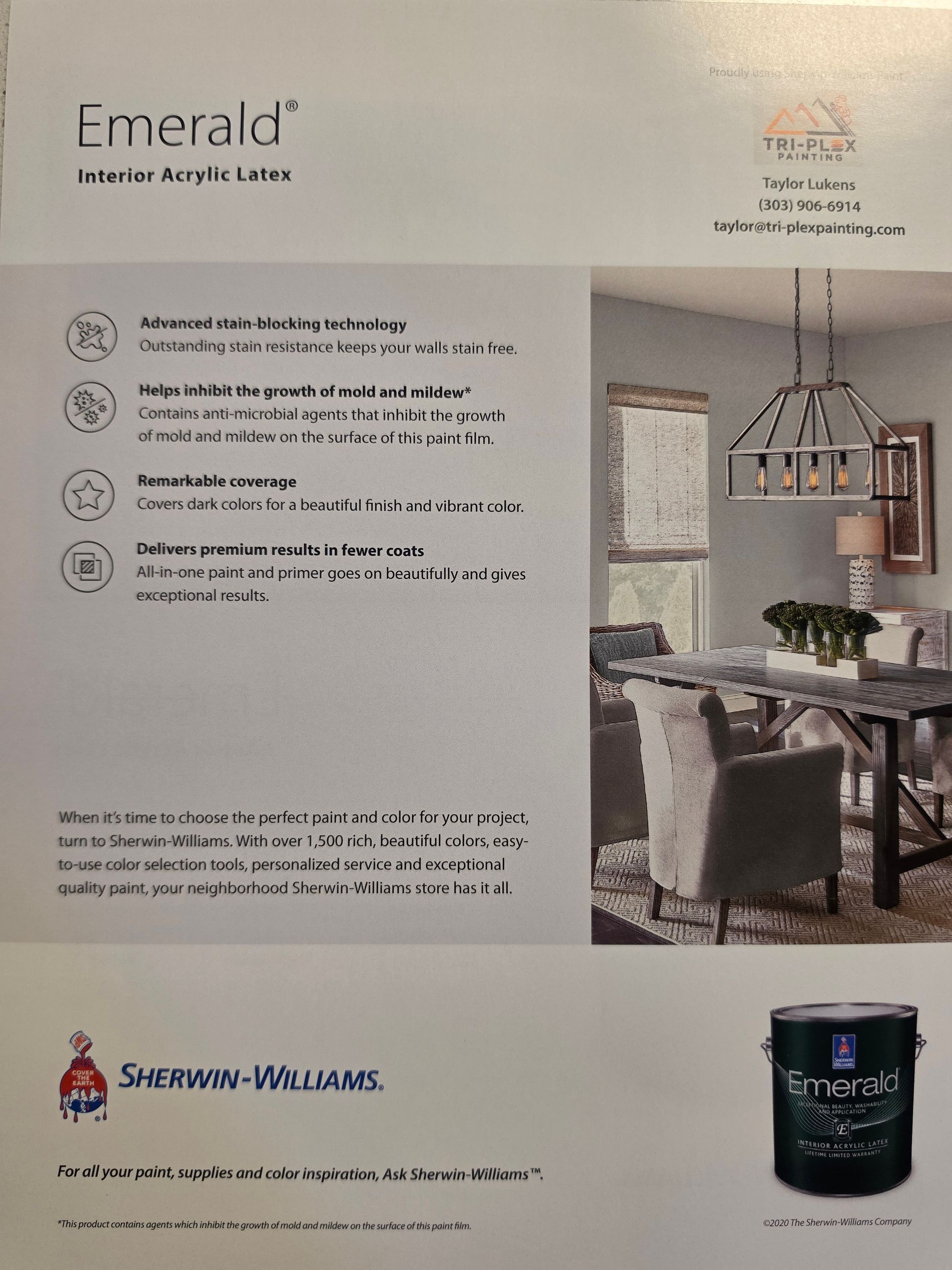
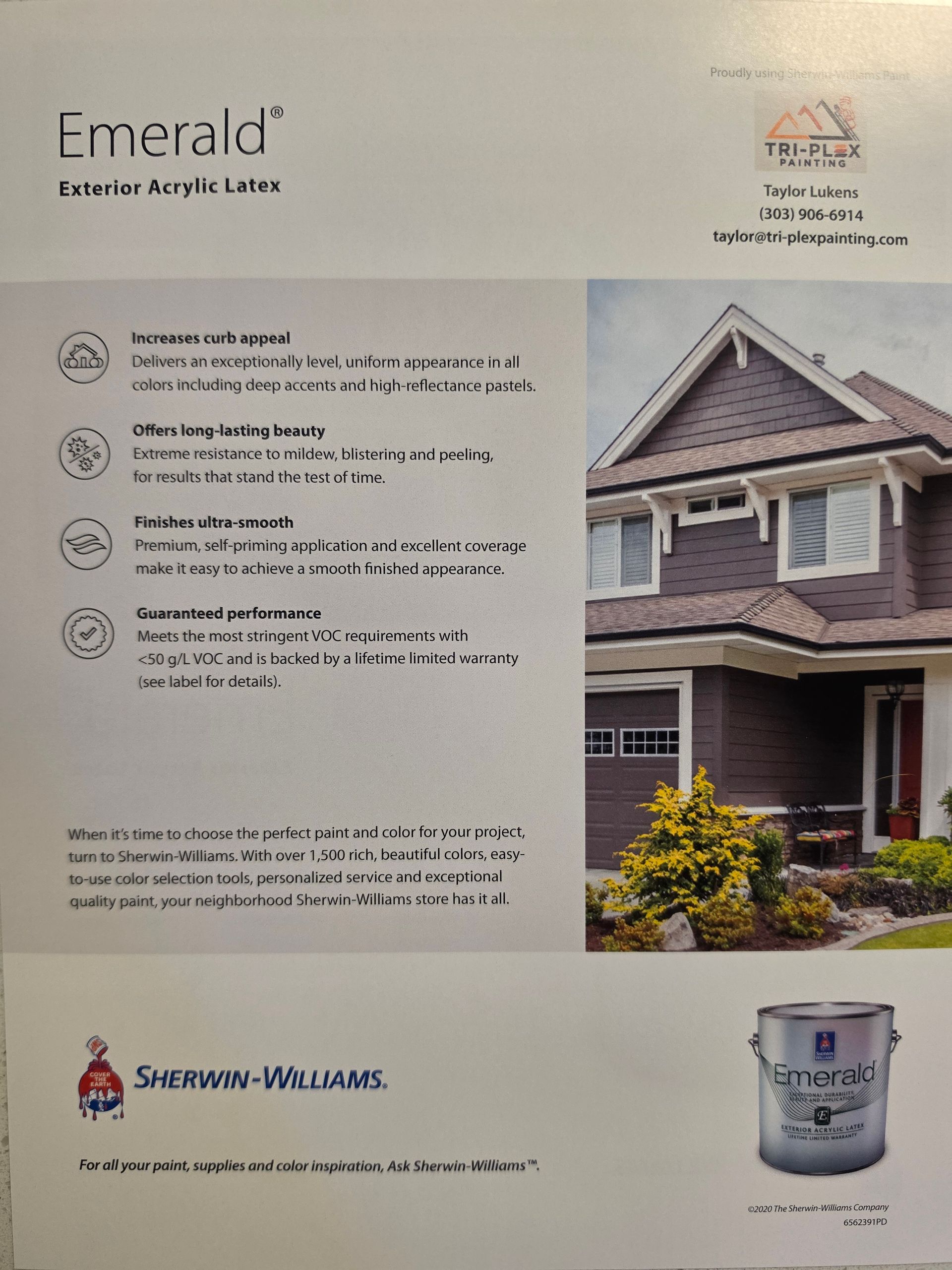
Sherwin-Williams Emerald Interior and Exterior: Is the Premium Paint Worth It?
Eventually, when we're discussing Sherwin-Williams paint options with a homeowner, we get to Emerald.
And the question is usually pretty straightforward: if we're already considering a good paint like SuperPaint or Duration, is it really worth spending more for Emerald?
Sometimes, yes. But we wouldn't say every room or every exterior automatically needs it.
Emerald sits toward the premium end of Sherwin-Williams' residential paint lineup. What you're paying for isn't simply the name on the can. You're looking for improvements in areas such as durability, coverage, washability, finish quality, and overall performance.
Whether those improvements are worth the additional cost depends on what you're painting and what you expect from it.
Emerald Interior: Where Finish and Durability Come Together
Interior paint is interesting because homeowners tend to notice different things.
Some people care most about how smooth the walls look. Others immediately ask us, "Can I wipe this down?"
If you have kids or pets, that second question can become pretty important.
Emerald Interior is a product we consider when a homeowner wants both a high-quality finished appearance and strong everyday durability. It provides good hide and coverage while creating a durable surface designed to stand up to regular cleaning.
That can make it particularly appealing in family rooms, kitchens, hallways, children's rooms, and other high-traffic areas that actually get used.
There is another situation where stepping up in paint quality can make sense: darker or more dramatic colors.
Deep blues, greens, charcoals, and other rich colors can be less forgiving than a simple off-white. Product selection, sheen, application technique, and even how light moves through the room can affect the finished appearance.
Does that mean Emerald automatically makes every dark color perfect? No. Proper preparation and application still matter. But when someone has spent considerable time choosing exactly the right color, using a premium finish paint can be a reasonable place to invest.
Emerald Exterior: Premium Paint Still Needs Good Preparation
On the exterior, Emerald becomes more about protection and long-term performance.
Colorado isn't particularly gentle on exterior paint.
A home in Highlands Ranch or Centennial may have one elevation getting hammered by afternoon sun while another side stays relatively protected. Then we add snow, hail, wind, moisture, and significant temperature swings throughout the year.
Emerald Exterior is worth considering for homeowners looking for a premium exterior coating with strong durability and overall performance.
But this is also where we think the conversation around "premium paint" can become misleading.
The best paint we can buy still won't save rotten trim.
It won't permanently hold together badly deteriorated siding. It won't make failed caulking disappear. And it won't compensate for loose, peeling paint that should have been scraped and sanded before the new coating was applied.
If we're going to put a premium product on your home, we want the surface underneath it to justify that investment.
At Tri-Plex Painting, that may mean scraping and sanding failing coatings, spot priming exposed areas, replacing deteriorated siding or trim, completing minor repairs, and properly caulking the areas that should be sealed before the finish coats ever come out.
Sometimes that preparation takes longer than the actual painting.
And that's okay.
Is Emerald Better Than Duration?
On paper, it's easy to look at the product lineup and assume that the more expensive paint is automatically the right choice.
In the real world, it's a little more complicated.
If a homeowner wants a premium coating and plans on staying in the house for a long time, Emerald can be an excellent investment. If we're working with an important interior space where appearance and cleanability both matter, it may also be worth the upgrade.
But what if you're repainting a lightly used guest bedroom?
What if you're preparing a house to sell?
What if your budget would be better spent replacing deteriorated exterior trim rather than moving from an already good paint to the most expensive option?
Those are legitimate questions.
We would rather see a homeowner invest in proper preparation and a quality coating than cut corners on preparation just to say they used the most expensive paint.
So Where Does Emerald Fit?
We think of Emerald as an option for homeowners who want to invest toward the upper end of the paint system and who place a high value on durability, appearance, cleanability, and long-term performance.
That doesn't make SuperPaint, Cashmere, Latitude, or Duration the wrong choices. They simply solve somewhat different problems at different price points.
After painting homes throughout Littleton, Highlands Ranch, Centennial, Parker, Castle Rock, Lakewood, Golden, Morrison, Lone Tree, Cherry Creek, Cherry Hills, and the Denver Metro area, we've found that the best product recommendation usually comes after looking at the house—not before.
At Tri-Plex Painting, we can explain the differences, talk through the cost of upgrading, and help determine where spending more actually provides value.
Because at the end of the day, the goal isn't to put the most expensive paint on your home.
It's to put the right paint on it.